If your experiment needs statistics, you ought to have done a better experiment.
Ernest Rutherford
SO, YOU HAVE THE PROOF, YOU SAY…
If you haven’t read my previous posts on this topic, this may seem to you a delirium of an incompetent fool, which it very well may be, but still, do me a favor: don’t read this unless you read Part 1, Part 2 and Part 4 of this series of posts (while you’re at it, what the heck, you can also read Part 3, but I guess that will be asking too much of you…).
As promised in the previous post, I’ll go ahead and dismantle some of the more popular “evidence” of time dilation, so often referenced by the bunch of very important folks, who call themselves: “scientists” (for the record: I have nothing against scientists, have total respect for them, but who says you can’t make fun of people you have total respect for? These folks are funny people themselves, that’s why I respect them).
The first, and the most touted one, is known as: “Hafele & Keating (H&K) experiment” conducted back in 1971, in which they compared the atomic clocks located on two airplanes flying one eastward and the other westward and yet another clock moving eastward with the mother earth (in other words: seating still on the ground). Before saying anything else about this measurement, I need to mention that the results of the experiment were flawed, to say the least: the results were far from what they were predicting, and so they decided to “correct” them before publishing, or, in simple terms: they lied about their results. Yet still whenever you ask a physicist or just a smart-ass with letters: p, h and d written after their name, more often than not, the answer is: “oh, yes, we have an experimental proof of time dilation from these two dudes… what were their names again? Hafting and Kafele or Halfling and Tatele, anyway, those two proved with certainty that there is a time dilation”. A bit more informed people, however, would point out that, after H&K experiment, there were other similar experiments and, this time, nobody seemed to confess that “corrections” were made to the results. Which is actually a good thing, because, as I’m about to show you, the results are completely inconsistent with relativity and, in fact, are good evidence for the existence of what we agreed to call : “ether” for the lack of a better term. At least, that’s the plan.
Before doing that, however, I want to mention another alleged ‘evidence’ of time dilation of the same kind: the discrepancy between the atomic clocks in the GPS satellites and those on the surface of the earth. I’ll deal with all these “evidences” with a single blow, and, by the way, will provide some non-relativistic explanation to the “time dilation evidence” due to gravity (from the area saliently called: “General Theory Of Relativity”).
Let’s have a closer look at what these claims try to say. Let’s start with the planes experiment. The claim is that the clock on the plane flying eastward will go slower than the clock on the earth, which in turn, will go slower than the clock on the westward going plane. That’s because the former flies in the direction of the earth’s rotation and their velocities… sorry, forgot that we agreed to call this with a laymen word: ‘speed’ (not caring about the direction for now). So, as I was saying: the speed of eastward plain is earth’s speed plus plain’s speed, whereas, the speed of westward plain is plain’s speed minus earth’s speed, which, is a negative number because earth is moving faster than the plain. I read this and I ask myself (since nobody else hears me talking or really gives a damn, anyway…): relative to what? According to Einstein’s relativity, earth’s speed doesn’t matter at all in this case and both plains are flying with the same (approximately) speed relative to the earth and with the exactly same speed relative to each other. Thus, according to the relativity, the observations (and expectations of the H&K) are totally contradicting the relativity principles. Yes, we can see the difference with respect to the sun, when we fly east or west (the day lasts shorter or longer), but the control clock is not on the sun, it’s on the earth. Either I’m missing something, or that happens to the entire scientific community. Hard to believe the latter, but… Yes, i know: since the motion is circular, the frames of reference are not inertial, yada, yada, yada… This doesn’t change the symmetric nature of the experiment in earth’s frame of reference.
As a matter of fact, the discrepancy observed, better than anything else, suggests the existence of an absolute reference frame, or media, relative to which all the movements are happening, in which case we can safely add and subtract the veloc… sorry: speeds of the moving parts (like the earth and the airplane, but not the light: that one has constant speed with respect to the media, like all other waves do, more or less, especially when the wavelengths and media are the same… But I guess, I digress, and I do that with rhyme). Now, how would the existence of the ether explain the differences in the atomic clock measurements? I’ll tell you, right after I deal with the GPS satellite “time dilation” phenomenon, since the explanation is somewhat similar.
Indeed, the GPS time has to be corrected as the atomic clocks on the satellite divert from those on earth and the relativity sees time dilation as the usual suspect. In this case, there are two aspects though. The first one is the time dilation due to the satellite’s speed which is, again, claimed to be higher than the earth’s speed. Yeah… but the GPS satellites, actually stationary relative to the earth. Again, just like with H&K plains: the satellite moves faster that the earth relative to some absolute frame of reference, but not to each other.
The second aspect is related to the fact that, because the satellite is far from the earth, the gravity there is weaker and, “obviously”, the time dilation is observed, due to the postulates of the general theory of relativity. I did mention before that this flavor of relativity makes a bit more sense to me than the special one, not because I think there, indeed, is time dilation, but because gravitation produces interesting effects due to the fact that, because of gravitation, the ether is dragged stronger right above the surface of the earth and gets weaker as you move away and up, and, as I suspect, it might be more compressed down here than far up. It’s there, up at the satellite elevation, where Michelson and Morley should have taken their contraption and tried to detect the ether wind they were looking for. Maybe they even wanted to do this, but the nearest satellite at the time was the Moon, and they just gave up the whole idea…
So, whether there are airplanes or GPS satellites, in every case the differences in speeds seem to be mostly relative to some absolute frame of reference, and, if its majesty Ether (I’ll be writing it with a capital letter henceforth…) may be exactly that: because of the gravitational nature of the Ether drag, the GPS on high elevation would also “feel” some Ether wind compared to that close to the earth’s surface. And the wind may not just come from the satellite’s rotation with the earth, but also from the largely unknown speed, direction and trajectory in which earth moves as a sum of all the moving parts including the solar system, the galaxy, the cluster, and who knows what else. There are some who believe that all this mindless and pointless movements result in the Earth moving towards Constellation of Leo with the speed of 390 km/second (see this if you’re interested), but I’m not going to make any judgments about this.
Anyway, I suspect that, since I blamed the Ether wind for the atomic clock discrepancies, I might also be asked to provide some explanations and justifications to support the claim, meaning: reveal, to the unsuspecting world, the secret workings of Ether causing atomic clock disruptions. And that’s exactly what I’m going to do now.
The thing is that with any presence of movement relative to Ether, the atomic clocks may be not as precise as you may think, especially if the clock is moving with acceleration (or deceleration). To understand why, we should first understand how the atomic clocks work. I’ll have to simplify the explanation to the bare essence to keep you awake, but feel free to Google it yourselves, if interested.
Let’s consider the cesium atomic clocks, which considered the most accurate and which were used during the H&K experiment. In really, really simple words: there is a microwave frequency which resonates with the oscillations of the cesium atoms at exactly: 9,192,631,770 Hertz, which causes the atoms change their energy level, then those, excited, atoms strike a detector and so we know the frequency is absolutely correct. Well, something like that, the details are not important for this discussion, what’s important is that there are: a microwave and a resonance. And I’m not talking about the oven in your kitchen, though it also uses the electromagnetic waves of similar frequency to heat your breakfast. Many attempts to use the atomic clock for similar purpose didn’t make my breakfast more enjoyable (I’m lying, of course, I never tried to warm up my breakfast with an atomic clock… in reality, I did it with my lunch), but, when radiated at the right frequency, managed to excite cesium atoms, which, apparently, find the whole this resonance thing exciting. Get the pun? He-he.
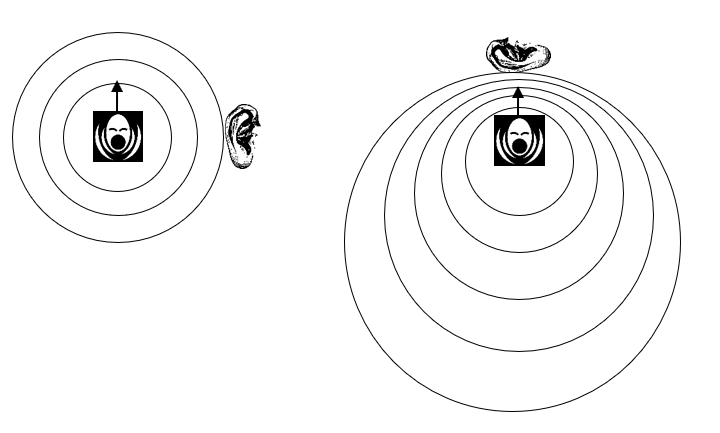
Anyway, this works fine when the wave source and atoms are in the same Inertial Frame of Reference, or IFR (remember: we talked about this in my first post?), and, even if the entire contraption is moving with the high speed, and everybody else (not in the same IFR) feels it by perceived change in frequency of the microwave (Doppler shift, remember?), the cesium atoms don’t feel that because they move with the wave source at the same speed. That’s fine, until we introduce acceleration, also known as change in velocity (this time I won’t use the word speed, since the change in direction may matter too). Whenever the clock accelerates relative to the Ether, the atoms perceive the microwave frequency Doppler-shifted, which means that the atoms get excited at a different frequency than the microwave source emits, and so, the latter, in its blissful ignorance, ‘believes’ its frequency is exactly: 9,192,631,770 Hertz, but, in reality, it isn’t.
Now you would ask: where the acceleration comes from? Well, you might have heard about the universe expanding and doing that with constantly increasing speed, and that acceleration, according to the current scientific beliefs, is mind boggling, some galaxies moving away faster than the speed of light (that’s the artifacts of “space inflation”, which doesn’t care about such minor problems as light speed barrier, don’t want to go into that one here…), though, I personally have lots of doubts about this theory (see my other post on this), but whether it’s accelerating or decelerating, the speed change rate is likely relatively constant for extended periods of time, so the impact on, say, the GPS clock would likely be relatively constant as well, enabling it to apply constant correction to the time signals.
There is a delicate moment in this, that we need to understand: the orientation of the atomic clock, relative to the direction of acceleration, is significant for the time discrepancy amount and sign, however, if the orientation changes in a regular fashion, the discrepancy may be, on the average about the same. This is true, even if the change in orientation is completely symmetrical. I would hate to bore you with the formal proof of this point, just trust me on this, OK? At the very crude intuitive level, here’s the analogy: if your speed is 100 km/h, twice faster is extra 100 km/h, however, twice slower is just 50 km/h, so, if you move twice slower half of the time then twice faster the other half, on the average, you move faster. Makes sense? It doesn’t? I don’t care what you think, go find the formulas and see for yourself you pedantic lunatic! That’s it, I’m pissed off, and I’m going to end this post right now. Good bye.
 Armen' s Random Thoughts